
Type Of Ships
1. Container Ship
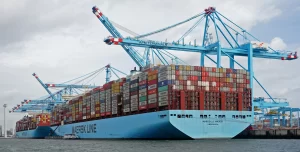
Container ships are cargo vessels that carry all of their load in truck-size intermodal containers, a method known as containerization. They are a common means of commercial intermodal freight transport.
2. Bulk Carrier
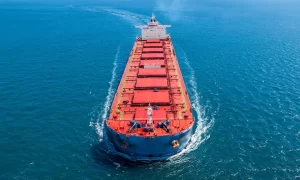
A bulk carrier, bulk freighter, or bulker is a merchant ship specifically designed to transport unpackaged bulk cargo such as grains, coal, ore, and cement in its cargo holds. Since the first specialized bulk carrier was built in 1852, economic demands have driven their development, leading to growth in both size and sophistication.
Today’s bulk carriers are designed for maximum capacity, safety, and efficiency, and can endure the rigors of their operations. Bulk carriers account for about 40% of the world’s merchant fleet and vary in size from small single-hold mini bulkers to massive ore ships capable of carrying up to 365,000 metric tons of deadweight.
There are various specialized designs—some can self-load and unload, while others rely on port facilities. Over half of all bulk carriers are owned by Greek, Japanese, or Chinese companies, and more than a quarter are registered in Panama. South Korea is currently the largest builder of bulkers, with 82% of ships built in Asia.
The crew plays a crucial role in loading/unloading, navigation, and maintenance. These operations can be dangerous, often taking up to 120 hours on large ships. Crews can range from 3 to 30 members, depending on ship size.
Bulk cargo can be dense, corrosive, or abrasive, posing risks such as cargo shifting, spontaneous combustion, or saturation. Older ships with corrosion issues have contributed to numerous sinkings. As a result, international regulations have been introduced to improve ship design, inspection, and emergency evacuation procedures.
3. Cruise Ship
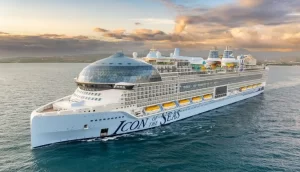
A cruise ship or cruise liner is a passenger vessel used for leisure voyages, where the journey and onboard amenities are part of the experience, in addition to various destinations. Cruise ships usually operate in round-trip itineraries, returning to the port of origin.
In contrast, ocean liners are built for direct transportation over long distances (line voyages). Ocean liners are structurally stronger to handle harsh ocean conditions and typically feature high freeboards and reinforced hulls.
Although luxurious, traditional ocean liners were not ideal for tropical cruising due to their high fuel consumption, deep draughts, and closed decks. Modern cruise ships prioritize tourist comfort, often resembling floating condominiums with balcony cabins and extensive entertainment options.
4. Reefer Ships
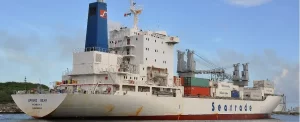
A reefer ship is a specialized vessel used for transporting perishable goods that require temperature-controlled environments, such as fruits, vegetables, fish, dairy, and meat.
Reefer ships fall into three main categories:
-
Side-Door Vessels
Equipped with watertight side ports for forklift or conveyor loading/unloading, making them suitable for all-weather operations. -
Conventional Vessels
Operate with top-opening hatches and cranes/derricks. Cargo holds must be covered during wet weather to prevent flooding. -
Refrigerated Container Ships
Carry containerized refrigerated units with individual cooling systems. Unlike regular container ships, these are specially equipped with the necessary power infrastructure to support many refrigerated containers.
5. Roll-On/Roll-Off (Ro-Ro) Ships
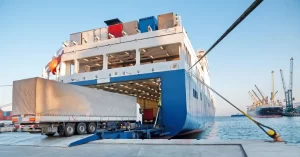
Ro-Ro ships are designed to carry wheeled cargo such as cars, trucks, trailers, or rail cars that are driven on and off the ship using built-in ramps. This differs from Lo-Lo (Lift-on/Lift-off) vessels, which use cranes for cargo handling.
Ro-Ro vessels are highly efficient, with stern or bow ramps for rapid loading/unloading. While ferries for short distances may use similar systems, the term Ro-Ro typically applies to large ocean-going ships.
6. Oil Tankers
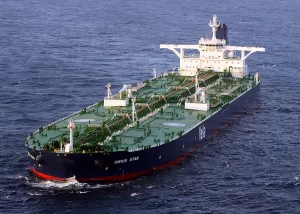
Oil tankers, also known as petroleum tankers, are merchant vessels designed for the bulk transportation of oil. They are mainly divided into two categories:
-
Crude Tankers – Transport unrefined crude oil from extraction sites to refineries.
-
Product Tankers – Carry refined products like gasoline and petrochemicals to market locations.
Tankers vary greatly in size, from small coastal tankers to ULCCs (Ultra Large Crude Carriers) that can carry 550,000 DWT. They transport approximately 2 billion metric tons of oil each year and are one of the most cost-efficient methods of oil transport.
Special types include replenishment oilers, floating storage units, and combination carriers. Due to several high-profile oil spills, tankers are subject to strict design and operation regulations.
7. Chemical Tankers
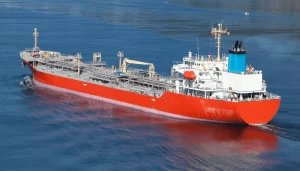
A chemical tanker is a vessel designed to transport chemicals in bulk. These ships usually range from 5,000 to 40,000 DWT and have specialized cargo tanks.
Tanks are either made of stainless steel (for corrosive substances like sulfuric acid) or epoxy-coated (for products like vegetable oil). Their small size reflects the niche nature of the cargo and the limited size of port terminals that handle them.
8. LNG Carrier
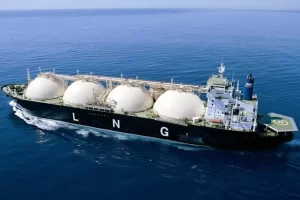
An LNG (Liquefied Natural Gas) Carrier is a tank ship used for transporting LNG at cryogenic temperatures. As global demand for LNG rises, newer vessels are being built with capacities up to 260,000 m³.
As of March 6, 2010, there were 337 LNG ships engaged in deep-sea LNG transport. These ships play a vital role in the global energy supply chain.
9. FPSO Vessels (Floating Production Storage and Offloading Units)
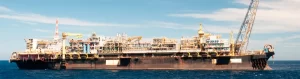
FPSO vessels have become essential to the offshore oil and gas industry. They are used for the processing and storage of oil/natural gas and later offload it onto tankers or through pipelines.
The first FPSO, Shell Castellon, was built in Spain in 1977. FPSOs are ideal for remote offshore locations where laying pipelines is not cost-effective. They can be converted oil tankers or custom-built units.
There are two main types:
-
Converted Oil Tankers
-
Purpose-Built FPSOs
FPSOs can be permanently moored or disconnectable, depending on environmental conditions. The design considers wind direction, wave height, and ocean current.
With flammable products on board, FPSOs are subject to strict international safety regulations by organizations like the IMO (International Maritime Organization). Safety protocols and crew training are crucial.
Notable Example:
The world’s largest FPSO, Girasol FPSO, built in Korea, can process 200,000 barrels/day and store 2 million barrels.